Description:
A remote Florida Everglades-area
immigration detention facility and broader ICE detention practices involving work-for-pay programs, paid phone access, conditions of confinement, attorney access barriers, and humanitarian concerns — including comparisons by critics to “concentration camps.”
�� Summary
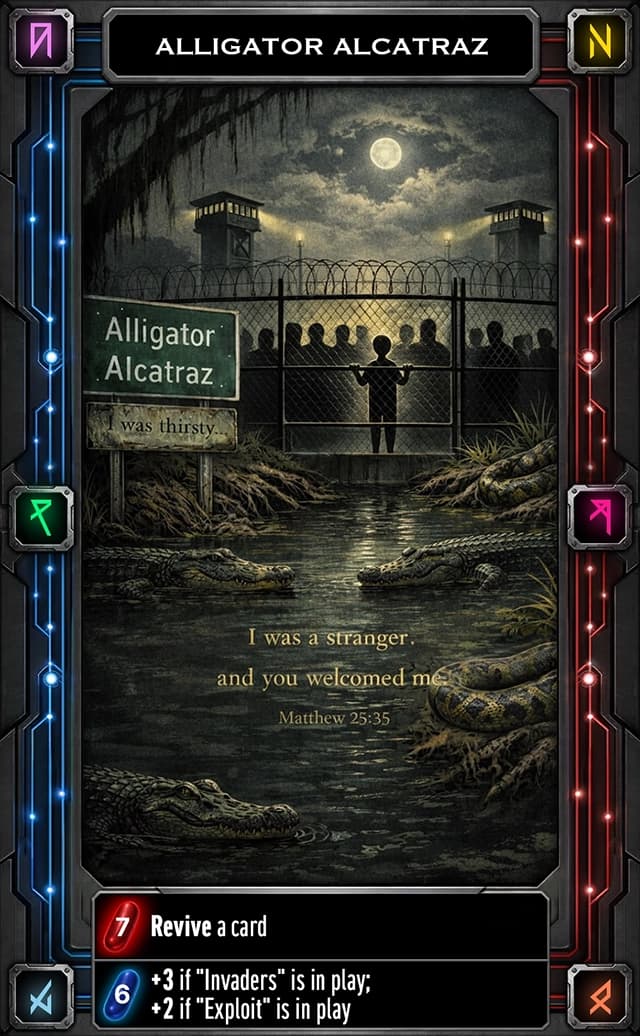
“Alligator Alcatraz” is a nickname used by critics and media outlets to describe a remote immigration detention facility in the Florida Everglades (often identified in reporting as the South Florida Detention Facility or similar ICE-contracted sites). The term reflects the facility’s isolation, harsh environmental conditions, and perceived difficulty for families and attorneys to access detainees [1][2].
Reporting, litigation, and detainee testimony describe recurring issues including paid phone access, reliance on low-wage work programs, allegations of unsanitary conditions, mosquito infestations, water and sewage problems, and barriers to meaningful access to
legal counsel [3][4][5].
While ICE maintains that detention is civil and work programs are voluntary, critics argue that requiring detainees to pay for communication and basic necessities creates a coercive economic structure within detention. Broader debate includes whether large-scale immigration detention resembles what some lawmakers and scholars have called “concentration camps,” a characterization that remains contested [6][7].
�� Findings
1️⃣ What “Alligator Alcatraz” Refers To
“Alligator Alcatraz” is not an official designation but a colloquial term used in journalism and advocacy.
Commonly cited characteristics:
- Remote Everglades location
- Difficult access for families and attorneys
- Extreme heat, humidity, and mosquito exposure
Limited public and media visibility [1][2]
Implications of remoteness:
- Long travel times for visitation
- Reduced access to legal representation
- Lower transparency and oversight
While remote detention is lawful, legal scholars note that isolation can function as a barrier to due process and
accountability [5].
2️⃣ Phone Access and Family Contact
Across ICE detention
systems:
- Phone calls are generally not free
- Detainees rely on prepaid accounts or commissary funds
Calls are often monitored or time-limited [3][8]
Reports and lawsuits describe:
- Dropped or unreliable calls
- Difficulty reaching attorneys
Limited access windows [4][5]
ICE policy requires access to counsel, but:
Courts and advocacy groups have repeatedly argued that practical access may fall short of formal policy guarantees [5][9].
For detainees without financial support, communication is often economically constrained.
3️⃣ Work Programs and the $1-Per-Day Wage
ICE detention facilities operate Voluntary Work Programs (VWP):
Typical pay: ~$1 per day [3][10]
Tasks include cleaning, food service, and maintenance
ICE position:
- Work is voluntary
- Provides structure and modest compensation
Criticism centers on economic realities:
- Phone calls often cost money
- Hygiene items and food extras require commissary funds
- Detainees without outside support may rely on work income
This creates what critics describe as:
A “work-to-afford-necessities” dynamic, where voluntariness is constrained by need [3][4][10].
Courts have heard multiple lawsuits arguing that such systems resemble forced or exploitative labor conditions, though rulings vary [10].
4️⃣ Conditions of Confinement Allegations
Reporting and legal filings describe allegations including:
- Mosquito infestations
- Extreme heat exposure
- Unsanitary or malfunctioning toilets
- Sewage backups
- Limited clean water
- Inadequate medical care
Restricted hygiene supplies [4][11][12]
ICE and contractors:
- Dispute some claims
- State facilities meet inspection standards
Legal standard:
- Immigration detention is civil, not punitive
- Conditions must not constitute punishment under constitutional standards
Many lawsuits hinge on whether:
Conditions cross from administrative detention into punitive or degrading treatment [5][9].
5️⃣ Access to Counsel and Due Process Concerns
Advocates and court filings report:
- Delays in attorney access
- Lack of confidential communication
- Limited access to phones or legal materials
Lack of writing supplies (e.g., detainees improvising with soap) [4][5]
Legal significance:
- Immigration proceedings are civil
- But outcomes (deportation, asylum denial) are severe
Courts have repeatedly emphasized:
Meaningful access to counsel is a core due-process requirement, even in civil detention [9].
6️⃣ Detention of Children and Families
Facility-specific reporting often focuses on adults, but broader U.S. policy includes:
- Family detention centers
- Detention of minors
Ongoing litigation under the Flores Settlement Agreement [13]
Key issue:
- Whether prolonged detention of minors violates constitutional and humanitarian standards
Any claim about specific facilities requires time-specific verification, but:
The broader system has faced sustained legal and ethical challenges regarding children [13].
7️⃣ “Concentration Camp” Comparison
The term has been used by some lawmakers and scholars (notably in 2019 debates).
Arguments supporting the term:
- Mass civil detention of a specific population
- Detention without criminal conviction
Harsh conditions and isolation [6][7]
Arguments opposing the term:
- Facilities are legal under U.S. law
- Not extermination camps
- Term carries Holocaust-specific connotations
Historically, “concentration camp” has referred broadly to:
- Civilian detention without trial (e.g., Boer War camps, Japanese-American internment)
Its modern use is:
Highly contested and politically charged.
8️⃣ Humanitarian and Legal Framework
Immigration detention is governed by:
- Civil (not criminal) law
- ICE Performance-Based National Detention Standards (PBNDS)
Legal requirements include:
- Humane conditions
- Medical care access
- Legal counsel access
Non-punitive treatment [3][9]
Human-rights organizations argue:
- Low wages + paid necessities = economic coercion
- Isolation undermines due process
Conditions may violate dignity standards [4][11]
ICE maintains:
- Facilities are inspected
- Standards are enforced
�� Pattern Observed
Recurring structural dynamics:
- Remote placement reduces transparency
- Civil detention resembles incarceration in practice
- Low-wage labor intersects with paid communication systems
- Financial dependency affects access to rights
- Legal disputes focus on conditions and access, not detention authority
The central debate is not whether detention is legal—but:
Whether its implementation meets constitutional and humanitarian standards.
�� Discussion
1) Civil Authority vs. Lived Reality
Legally:
- Immigration detention is administrative
Practically:
- Conditions often resemble incarceration
This creates a gap between:
- Legal classification and lived experience
2) Voluntariness vs. Economic Constraint
Work programs are officially voluntary, but:
- Communication is not free
- Hygiene often requires payment
This creates a constrained choice environment:
- Voluntary in form, but economically pressured in practice
3) Isolation as a Structural Feature
Remote placement:
- Reduces oversight
- Limits attorney access
- Increases detainee vulnerability
Isolation can function as:
- A non-explicit but powerful control mechanism
4) Language and Moral Framing
The “concentration camp” debate reflects:
- Legal vs. moral definitions
- Historical vs. contemporary usage
Its use signals:
- Concern about systemic harm, not a settled legal classification
5) Broader Insight
This issue reflects a deeper tension:
State authority to control borders vs.
Obligations to uphold human dignity and due process
�� Sources
[1] Miami Herald / Florida regional reporting on Everglades detention facilities [2] PBS NewsHour & AP reporting on remote ICE detention sites [3] ICE Performance-Based National Detention Standards (PBNDS) [4] ACLU reports on ICE detention conditions and lawsuits [5] Federal court cases on immigration detention access to counsel (e.g., ACLU v. ICE cases) [6] U.S. Holocaust Memorial Museum — definition and historical use of “concentration camps” [7] Congressional and academic debate on immigration detention terminology (2019–2021) [8] DHS Office of Inspector General reports on detainee communication access [9] American Immigration Council — due process and detention standards [10] Federal litigation on ICE detainee labor (e.g., Colorado GEO Group case) [11] Human Rights Watch reports on U.S. immigration detention conditions [12] DHS OIG inspections of ICE facilities [13] Flores Settlement Agreement and related federal litigation