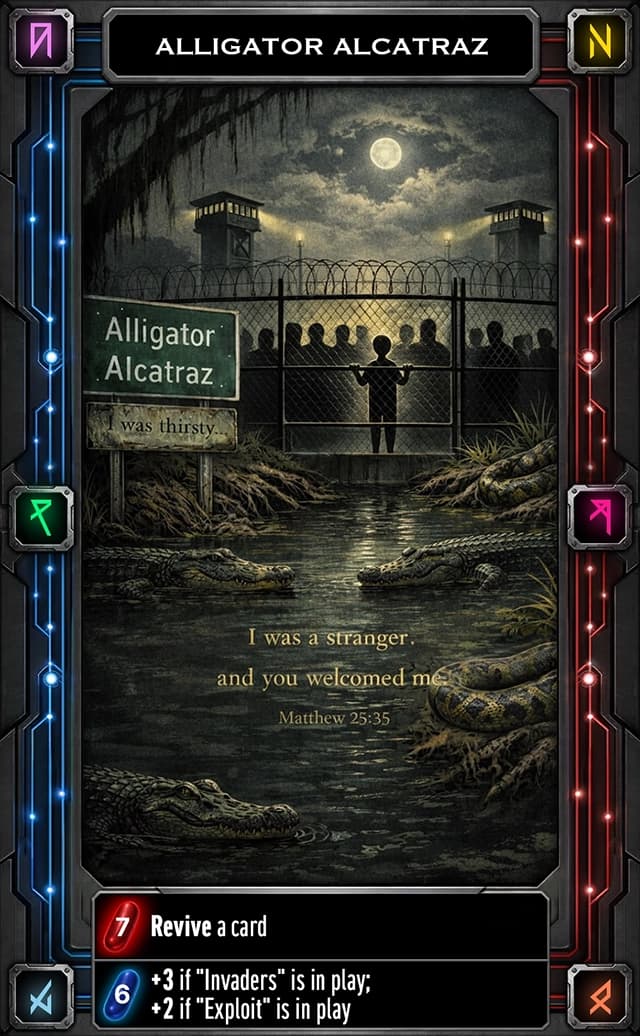
Description:
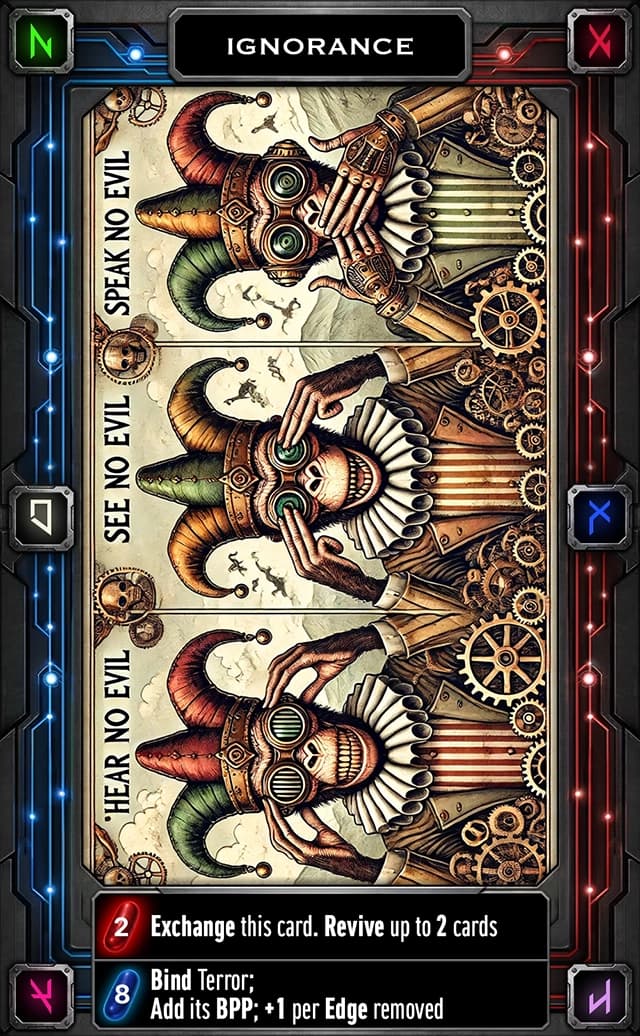
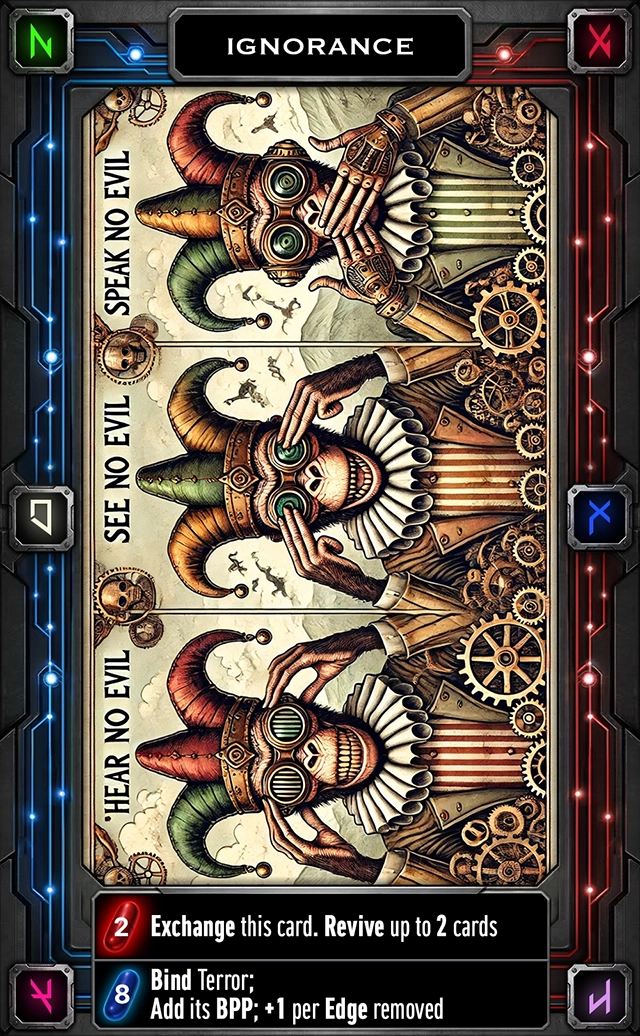
The tendency to avoid, ignore, suppress, or distort information that is uncomfortable, threatening, complex, or cognitively costly—often symbolized by “see no evil, hear no evil, speak no evil.”
�� Summary
“Ignorance” is not simply the absence of knowledge—it is often an active psychological and social process. Humans frequently filter information to protect identity, reduce discomfort, maintain group belonging, or avoid cognitive overload. The classic “three monkeys” metaphor captures this: people may avoid seeing, avoid hearing, or avoid speaking inconvenient truths.
Research across psychology, behavioral economics, and information theory shows that ignorance can be adaptive in the short term (reducing stress, simplifying decisions), but costly in the long term (distorted beliefs, poor decisions, and vulnerability to manipulation). Mechanisms such as cognitive dissonance, motivated reasoning, and information avoidance help explain why individuals may prefer ignorance even when accurate knowledge is available [1][2][3].
�� Findings
1️⃣ What Ignorance Is (Beyond “Not Knowing”)
Ignorance exists in multiple forms:
- Passive ignorance: simply lacking information
- Active ignorance (willful ignorance): avoiding or rejecting available information
Strategic ignorance: choosing not to know because knowledge would create obligations or discomfort
In many real-world contexts, ignorance is not accidental—it is selected [3].
2️⃣ Cognitive Dissonance: Avoiding Psychological Pain
One of the strongest drivers of ignorance is cognitive dissonance—the discomfort that arises when beliefs, actions, or evidence conflict [1].
Example pattern:
- “I believe X is good”
- Evidence suggests X is harmful → Tension arises
Resolution options:
- Change belief (hard)
- Change behavior (hard)
- Ignore or reinterpret evidence (common)
Ignorance becomes a psychological defense mechanism.
3️⃣ Motivated Reasoning and Identity Protection
Humans do not process information neutrally. Instead, we often:
- Accept information that supports our identity
- Reject or scrutinize information that threatens it
This is known as motivated reasoning [2].
Key idea:
People ask, “Is this true?” when they want it to be false, and “Can I believe this?” when they want it to be true.
Ignorance here protects:
- Political identity
- Moral self-image
- Lifestyle choices
4️⃣ Information Avoidance (Choosing Not to Know)
Research shows people sometimes deliberately avoid information even when it is available [3].
Examples:
- Avoiding medical results or financial realities
- Not engaging with distressing news
Avoiding how animals are treated in order to continue consuming certain foods without moral discomfort
Why?
Emotional cost: anxiety, guilt, moral conflict
Decision burden: knowledge may require behavior change
Loss of comfort: awareness disrupts habits
Ignorance here functions as a way to preserve psychological ease and continuity of behavior.
5️⃣ Social Dynamics, Disinformation, and Responsibility Avoidance
Ignorance is often reinforced socially and informationally.
A) Disinformation and Low Fact-Checking
People are more likely to believe information that aligns with prior beliefs. False or misleading claims spread more easily when:
- They are emotionally charged
- They confirm existing views
- They are repeated frequently
Many individuals do not verify sources when information feels intuitively correct—a phenomenon related to cognitive ease and the illusory
truth effect [5].
This creates:
- Susceptibility to disinformation
- Reinforcement of incorrect beliefs
- Reduced incentive to seek corrective evidence
B) Identity-Protective Denial
People may reject true information because accepting it would imply:
- “I supported the wrong thing”
- “My decision caused harm”
- “I bear some responsibility”
Examples:
- Denying negative outcomes tied to political choices
- Minimizing consequences of policies one supported
- Reframing evidence to avoid
accountability
This is a form of self-protective ignorance, where truth is resisted not because it is unclear, but because it is psychologically costly [8].
C) Group Reinforcement
Echo chambers reduce exposure to conflicting information
Pluralistic ignorance allows false consensus to persist
Social risk discourages speaking uncomfortable truths
The “speak no evil” dynamic emerges here:
Individuals may recognize issues privately but remain silent publicly.
6️⃣ Information Overload and Cognitive Limits
Humans operate under bounded rationality [6]:
- Limited attention
- Limited processing capacity
- Limited time
In modern environments saturated with information, ignorance becomes a filtering strategy.
From an information-theoretic perspective:
Information processing has a cost [7]
The brain compresses reality by discarding data
Thus, ignorance can function as:
A necessary simplification—but one that can become distortion.
7️⃣ Strategic Ignorance and Moral Buffering
Ignorance can be used to avoid moral responsibility.
Examples:
- Avoiding knowledge of harmful supply chains
- Choosing not to investigate consequences of one’s actions
- Ignoring downstream effects of decisions
This allows individuals to:
- Continue benefiting from systems
- Avoid internal conflict
- Maintain a positive self-image
�� Pattern Observed
Ignorance tends to emerge when:
- Truth creates discomfort or responsibility
- Beliefs are tied to identity or past choices
- Information environments reinforce existing views
- Verification requires effort but belief is effortless
Under these conditions, ignorance becomes stable, self-reinforcing, and socially supported.
�� Discussion
Ignorance is often a trade-off, not a failure.
Short-term benefits
Reduced anxiety
Preservation of identity
Maintenance of social belonging
Lower cognitive load
Long-term costs
Distorted understanding of reality
Increased vulnerability to manipulation
Poor decision-making
Reduced accountability
The Role of Disinformation
In modern information systems, ignorance is not only self-generated—it is often externally amplified.
Disinformation exploits emotional triggers
Repetition increases perceived truth (illusory truth effect) [5]
Complexity discourages verification
This creates a feedback loop:
Ignorance makes disinformation easier to accept, and disinformation reinforces ignorance.
The “Three Monkeys” Revisited
See no evil → Avoid uncomfortable evidence
Hear no evil → Reject conflicting information
Speak no evil → Avoid consequences of truth
Together, they form a system where:
- Awareness is filtered
- Truth is softened or ignored
- Silence maintains stability
- Final Insight
Ignorance persists not because information is unavailable, but because knowing often carries a cost—emotional, social, or moral.
�� Sources / Foundations
[1] Festinger, L. (1957). A Theory of Cognitive Dissonance [2] Kunda, Z. (1990). The Case for Motivated Reasoning [3] Golman, R., Hagmann, D., & Loewenstein, G. (2017). Information Avoidance [4] Nyhan, B., & Reifler, J. (2010). Corrections Fail: The Persistence of Political Misperceptions [5] Pennycook, G., & Rand, D. (2019). Lazy, Not Biased: Susceptibility to Fake News [6] Simon, H. (1955). Bounded Rationality [7] Shannon, C. (1948). A Mathematical Theory of Communication [8] Tavris, C., & Aronson, E. (2007). Mistakes Were Made (But Not by Me)